A Professional's Take on the New Deathadder V3 Hyperspeed
Introduction
For more than fifteen years, the Deathadder silhouette has been one of the most recognizable icons in the world of computer peripherals. Since its debut in 2006, it has served as the gold standard for ergonomic mouse design, particularly for users with larger hands or those who prefer a palm grip. However, the mouse industry has undergone a radical transformation in recent years. The era of heavy, feature-laden mice with RGB lighting on every surface has given way to a relentless pursuit of lightweight performance, polling rate stability, and refined sensor accuracy. Professional esports players and dedicated enthusiasts now demand tools that disappear in the hand, providing raw performance without unnecessary weight or distraction.
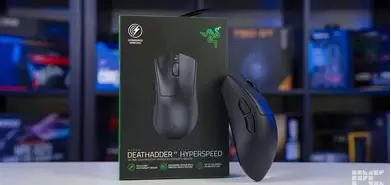
The Razer Deathadder V3 Pro was the first major step into this new "ultra-lightweight" ergonomic territory for the brand, stripping away the traditional flared design and excessive weight to focus on a modernized shape. While the V3 Pro was widely acclaimed, its premium price point and larger profile left a gap in the market. This gap is exactly what the Deathadder V3 Hyperspeed aims to fill. It is not merely a "budget" version of the Pro flagship; rather, it is a nuanced refinement that introduces a slightly smaller form factor, a new "smooth-touch" finish, and a balance of features that may actually make it the superior choice for a significant portion of the professional and competitive community.
In this analysis, the Deathadder V3 Hyperspeed is examined through the lens of performance, ergonomics, and technical engineering. We look at how it fits into the current landscape of high-performance gaming mice and whether its specific set of trade-offs aligns with what serious competitive players are looking for in 2026.
The Evolution of the Ergonomic Shape
The shift from the Deathadder V2 to the V3 era represented the most significant design overhaul in the product line’s history. The classic flared "front wings" were tucked in, the hump was shifted slightly to provide better support under the knuckle, and the overall profile became more akin to a refined Zowie EC-style mouse. The Deathadder V3 Hyperspeed continues this design language but scales it down by approximately 3% to 4% in every dimension compared to the V3 Pro.
While a few millimeters might seem negligible on paper, it fundamentally alters the handling characteristics of the device. The "medium" sizing of the Hyperspeed makes it significantly more accessible to users with medium-to-small hands who found the V3 Pro too cumbersome for precise micro-adjustments. For professional FPS players, particularly those in titles like Counter-Strike, Valorant, or Overwatch 2, the ability to "flick" with the wrist is paramount. A slightly smaller mouse allows for more "finger-room" within the palm, facilitating better vertical movement and fine-tuned aiming corrections that can be difficult with a mouse that fills the entire hand.
The ergonomic tilt remains, angling slightly to the right to promote a more natural forearm position. This helps reduce the risk of repetitive strain injuries, a critical consideration for professionals who spend eight to twelve hours a day at their workstations. The side buttons have also been positioned slightly higher than on previous generations, reducing the likelihood of accidental clicks while providing a clear tactile landmark for the thumb.
Technical Performance and Sensor Implementation
Under the hood, the Deathadder V3 Hyperspeed utilizes the Focus X 26K Optical Sensor. While this is technically a step below the "Gen-2" Focus Pro 35K sensor found in the most expensive models, from a professional standpoint, the difference is largely academic. The Focus X sensor offers a maximum sensitivity of 26,000 DPI and a tracking speed of 500 IPS (inches per second), which far exceeds the physical capabilities of any human user. Professional players typically operate between 400 and 1600 DPI, making the top-end ceiling of these sensors irrelevant for actual gameplay.
What truly matters is tracking consistency and lift-off distance (LOD) customization. The Focus X sensor provides excellent performance on various surfaces, including modern glass pads and traditional cloth mats. In testing across high-intensity scenarios, there is no evidence of smoothing, jitter, or spin-outs. The mouse feels incredibly responsive, translating 1:1 movement with zero perceived latency. This is bolstered by Razer's Hyperspeed Wireless technology, which has long been established as one of the most stable wireless protocols in the industry, rivaling or exceeding the speed of most wired connections.
One of the most notable inclusions is the support for an 8,000Hz polling rate (available via a separate wireless dongle). While the mouse ships with a standard 1,000Hz receiver, the capability to scale up to 8,000Hz means the device is "future-proofed" as monitor refresh rates climb toward 360Hz and 540Hz. At these high refresh rates, the smoother cursor movement provided by high polling rates becomes noticeably more fluid, though it does come at the cost of battery life.
Battery Life and Coating Refinement
One of the quietest but most impactful upgrades in the Deathadder V3 Hyperspeed is its new "Smooth-Touch" coating. Early iterations of Razer’s lightweight mice often featured a slightly chalky or rough texture that could feel slippery with dry hands or become "muddy" with sweat. The texture on the Hyperspeed feels premium and grippy without being overly rubberized. It strikes a balance that maintains its tactile integrity across long sessions, which is essential for maintaining a consistent grip during high-stakes matches.
Find top-rated Electronics products at great prices.
Shop Amazon →Battery life is equally impressive. In standard 1,000Hz mode, the mouse is rated for up to 100 hours of continuous use. For a mouse weighing in at approximately 55 grams, this is a remarkable feat of engineering. The weight distribution is centered, preventing the mouse from feeling front-heavy or back-heavy when picked up. Achieving this weight without using a "honeycomb" shell design speaks to the structural integrity of the internal chassis, ensuring there is no side-wall flexing or creaking even under heavy pressure.
Pros & Cons
- Pro: Exceptional Weight-to-Performance Ratio: At just 55g, it is one of the lightest ergonomic mice on the market that doesn't sacrifice structural integrity.
- Pro: Refined Medium Shape: The slightly smaller dimensions make it more versatile for a wider range of hand sizes and grip styles (Palm, Claw, and Fingertip).
- Pro: Optical Switch Durability: Utilizing Gen-3 Optical Switches eliminates double-clicking issues and provides a crisp, 0.2ms actuation time.
- Pro: High-End Coating: The smooth-touch finish provides excellent grip without the need for additional grip tape for most users.
- Con: 8K Dongle Sold Separately: To unlock the full potential of the 8,000Hz polling rate, users must purchase a separate accessory.
- Con: Absence of Bluetooth: This is a performance-first device, so there is no Bluetooth connectivity for casual productivity or multi-device switching.
- Con: Sensor Choice: While the Focus X is excellent, spec-sheet enthusiasts may be disappointed that it isn't the absolute top-tier 35K sensor.
Detailed Comparison: V3 Hyperspeed vs. V3 Pro
To understand where the V3 Hyperspeed sits in the market, it is essential to compare it directly to its larger sibling, the V3 Pro. The following table breaks down the primary technical differences between these two professional-grade tools.
| Feature | Deathadder V3 Hyperspeed | Deathadder V3 Pro |
|---|---|---|
| Weight | ~55 Grams | ~63 Grams |
| Dimensions | 122.2mm x 64.8mm x 41.3mm | 128.0mm x 68.0mm x 44.0mm |
| Sensor | Focus X 26K Optical | Focus Pro 30K/35K Optical |
| Max Polling Rate | 8,000Hz (With Dongle) | 8,000Hz (With Dongle) |
| Switch Type | Gen-3 Optical | Gen-3 Optical |
| Battery Life | Up to 100 Hours (1KHz) | Up to 90 Hours (1KHz) |
| Coating | New Smooth-Touch | Standard Matte |
The comparison clearly shows that the Hyperspeed is not just a cheaper alternative but a different category of mouse. It is lighter and smaller, which aligns with the current "speed" meta in competitive gaming. For many, the weight reduction and the improved coating will actually make the Hyperspeed the more desirable mouse, regardless of price.
What Professionals Care About: A Deep Dive
When selecting a mouse for professional use, there are three factors that take precedence over all others: reliability, shape, and weight distribution. Marketing buzzwords like "maximum DPI" are largely ignored in favor of these practical considerations.
Reliability of Optical Switches
Traditional mechanical switches rely on metal-on-metal contact, which can wear down over time and lead to the dreaded "double-click" bug. In a professional match, a double-click can mean the difference between a successful play and a round-ending mistake. The Deathadder V3 Hyperspeed uses Gen-3 Optical Switches, which use an infrared light beam to register clicks. This means there is no mechanical debounce delay required, and the switches are rated for 90 million clicks. The tactile feel is significantly improved over earlier optical iterations, feeling much closer to a high-quality mechanical switch while retaining the inherent advantages of optical technology.
The Importance of "Safe" Shapes
In the world of mice, a "safe" shape is one that does not force the hand into a specific position. While the Deathadder is an ergonomic mouse, the V3 revisions have moved it toward a more "safe" ergonomic design. The aggressive curves of the past have been smoothed out. This allows for more flexibility; a user can slightly tilt their grip or shift their palm without hitting an uncomfortable ridge. The V3 Hyperspeed, by being slightly smaller, further enhances this "safety," as there is more room for the hand to breathe. This flexibility is vital for professional players who may change their grip slightly depending on whether they are playing a slow, tactical shooter or a fast-paced arena game.
USB-C Connectivity and Charging
While wireless is the standard, the quality of the wired implementation remains important. The Hyperspeed features a USB-C port for charging, and the included Speedflex cable is light and flexible enough that you can continue playing while charging without feeling significant cable drag. This is a small but necessary feature for users who might forget to plug their mouse in overnight and need to play a session while tethered.
Professional Buying Guide: Is This the Right Mouse for You?
Deciding whether to invest in the Deathadder V3 Hyperspeed depends largely on your physical hand size and your primary use case. Here is how to determine if this mouse fits your setup:
Identify Your Hand Size
If your hands measure between 17cm and 19cm in length, the Hyperspeed is likely the ideal size for a comfortable palm or claw grip. For those with hands larger than 20cm, the V3 Pro may still be the better option to avoid your fingers overlapping the front of the mouse. If you have smaller hands (under 17cm) and prefer a palm grip, the Hyperspeed will feel like a large, supportive mouse, whereas it might feel like a medium-sized mouse for those with average hands.
Shop the latest Electronics picks on Amazon.
Shop Amazon →Consider Your Primary Games
Low-sensitivity players who move their entire arm across the mousepad will benefit immensely from the 55g weight. The lighter the mouse, the less inertia you have to overcome to start a movement and the less momentum you have to stop when you reach your target. If you play games that require constant, rapid 180-degree turns, the weight savings here will reduce fatigue over long hours. Conversely, high-sensitivity "wrist players" might find that a bit more weight (like that of the V3 Pro or even the V2) provides a touch more stability, though the industry trend is firmly leaning toward lighter being better.
Check Your Equipment Ecosystem
The Hyperspeed integrates with Razer Synapse for configuration. While some professionals prefer "driverless" mice, the software here allows for deep customization of the Focus X sensor, including asymmetric cut-off. This feature lets you set different distances for the sensor to stop tracking when you lift the mouse and start tracking when you put it back down, allowing for a highly personalized "feel" that matches your specific mousepad surface.
Environmental and Build Considerations
In a professional environment, build quality is tested to its limits. The Deathadder V3 Hyperspeed feels incredibly solid for its weight. There is no rattling when the mouse is shaken, and the scroll wheel—a common point of failure—features a tactile, stepped design that provides clear feedback for weapon switching or jumping. The feet (skates) are 100% PTFE (Teflon) with rounded edges, ensuring a smooth glide on both cloth and hard surfaces right out of the box. Unlike some competitors that provide thin, scratchy skates, these feel "broken-in" from the first use.
Furthermore, the move toward a slightly more compact design often results in a more rigid shell. With less surface area to cover, the plastic can be engineered to be thinner without losing structural strength. This contributes to the Hyperspeed's 55g weight while maintaining a premium, "non-hollow" feel in the hand.
A Strategic Addition to the Professional Arsenal
The release of the Deathadder V3 Hyperspeed suggests a fundamental shift in how gaming companies are approaching their product tiers. In the past, the second-tier model was often a compromised version of the flagship. Here, the "compromise" is actually a set of features that many users have been asking for: a smaller size and a lighter weight. For a professional, these aren't downgrades; they are tactical adjustments.
The inclusion of the Focus X sensor rather than the Focus Pro isn't a bottleneck for performance, and the move to a "medium" size fills a massive void in the ergonomic mouse market. Most high-performance "small" or "medium" mice are symmetrical (ambidextrous), leaving ergonomic users with few choices if they don't want a large, bulky device. The Hyperspeed stands almost alone in providing top-tier wireless performance in a mid-sized ergonomic shell at this weight class.
Conclusion
The Razer Deathadder V3 Hyperspeed is a masterclass in modernizing a classic. By taking the legendary DNA of the Deathadder and distilling it into a 55-gram powerhouse, the design team has created a tool that meets the specific demands of the modern competitive era. It respects the ergonomic needs of the user while stripping away the excess of previous generations. The result is a mouse that feels fast, precise, and remarkably natural to use.
While the 8K polling dongle is an extra expense, and the sensor isn't the absolute highest number on the spec sheet, the reality of professional play suggests that these factors are minor compared to the benefits of the new shape and weight. The "Smooth-Touch" coating and the structural rigidity of the device ensure that it is built for the rigors of daily high-level use. For anyone looking for an ergonomic mouse that doesn't feel like a relic of the past, the Deathadder V3 Hyperspeed is arguably the most compelling option currently available. It is a refined, focused, and highly effective tool that proves sometimes, a slight reduction in size leads to a massive increase in performance.